Cosmonic Blog

||10 min read

Cross-posted from the wasmCloud blog.

Our recent update to the Go Provider SDK brings the library up-to-date for wasmCloud 1.0, making it possible for Gophers to build custom wasmCloud capability providers that communicate with components over WebAssembly Interface Type (WIT) interfaces. In this post, we'll explore how you can get started writing wasmCloud 1.0 providers in Go.

Custom wasmCloud Providers in Go
||4 min read

Cross-posted from the wasmCloud blog.

Earlier this year we shared how a group of international CSPs (communication service providers) and their partners brought Wasm to telecoms. WebAssembly Canvas Phase I a TM Forum Catalyst Project, was an early PoC that evaluated whether wasmCloud, a CNCF sandbox project, could be a credible alternative to Kubernetes in managing TM Forum's estate of open APIs. Referred to as Open Digital Architecture (ODA) components, these open APIs are currently managed and maintained in ODA Canvas, an ODA repository built on Kubernetes.

TM Forum WebAssembly Canvas: Phase 2
||4 min read

Taking a Wasm component from idea, to server, to browser, to plugin

Cross-posted from the wasmCloud blog.

We built wasmCloud 1.0 on a conviction that with the right tools and the right standards, WebAssembly components could help developers reuse code—regardless of the language it was written in—and build applications much more efficiently, then deploy and distribute those applications anywhere. But I have to admit that on the developer side, I've been surprised by just how much components and well-known interfaces can speed up development.

Taking a Wasm App from Server to Browser to Plugin
||5 min read

Cross-posted from the wasmCloud blog.

In wash v0.28, we introduced wash plugins: a simple system for extending the wasmCloud Shell (wash) CLI with WebAssembly components. Users can install plugins from OCI registries, local files, or over HTTP, then execute the plugin as a subcommand to wash. Plugin developers simply build a given piece of CLI functionality as a component.

In this post, we'll show you how to install your first plugin. In themselves, plugins represent powerful, versatile tools that will accelerate workflows and help developers tailor tooling to their needs. But wash plugins are also a great example of how modular CLIs can be implemented with WebAssembly—and how components can accelerate development across a team.

Customize wash CLI with Wasm Plugins
||13 min read

Cross-posted from the wasmCloud blog.

A couple weekends ago I found myself wanting to write a Discord bot: specifically, a simple bot that I could tag with a message to trigger some processing and a response message. As I started thinking about what this bot could do, I realized this was an excellent use-case for a provider: instead of writing a one-off bot, I could create a reusable provider that would make it trivial to build any Discord bot I wanted.

The Discord API is fully-featured and massive, but for such a simple use-case, it would be overkill to work from scratch every time you wanted to write a bot. With a custom provider, I could simply write a component in any language and then plug it in to my provider via a simple API.

In this post, I'll retrace my steps to implement the custom provider using the wasmcloud-messaging interface, and show you how you can use the provider to write Discord bots of your own.

Build a Discord Bot Provider for wasmCloud
||6 min read

Cross-posted from the wasmCloud blog.

SEATTLE, (Open Source Summit), April 16, 2024. In response to growing demand among engineers for more open and community-led ways to bring the benefits of WebAssembly (Wasm) to Kubernetes, Cosmonic has contributed its Kubernetes operator to the CNCF wasmCloud ecosystem. The wasmCloud-operator (formerly known as Cosmonic Connect Kubernetes), allows Kubernetes practitioners free and unfettered access to wasmCloud in their own Kubernetes clusters, deployed and managed with the tools they know and trust.

wasmCloud Operator: Open Source Wasm on K8s
||10 min read

Cloud Native Wasm Day (co-located with KubeCon + CloudNativeCon EU, 2024) is always a great event but this year was a little different. In 2024, discussions are turning from theory towards working with Wasm in practice, with companies in a variety of sectors sharing their experiences.

What's particularly exciting for us, as CNCF wasmCloud maintainers, is how quickly wasmCloud is being adopted. So many of this year's talks come from companies already working with wasmCloud---many in production. We've summarized all the talks from this year's event and recommend paying particular attention to presentations from wasmCloud community users Orange and Machine Metrics.

Highlights and Insights from Wasm Day EU, 2024
||10 min read

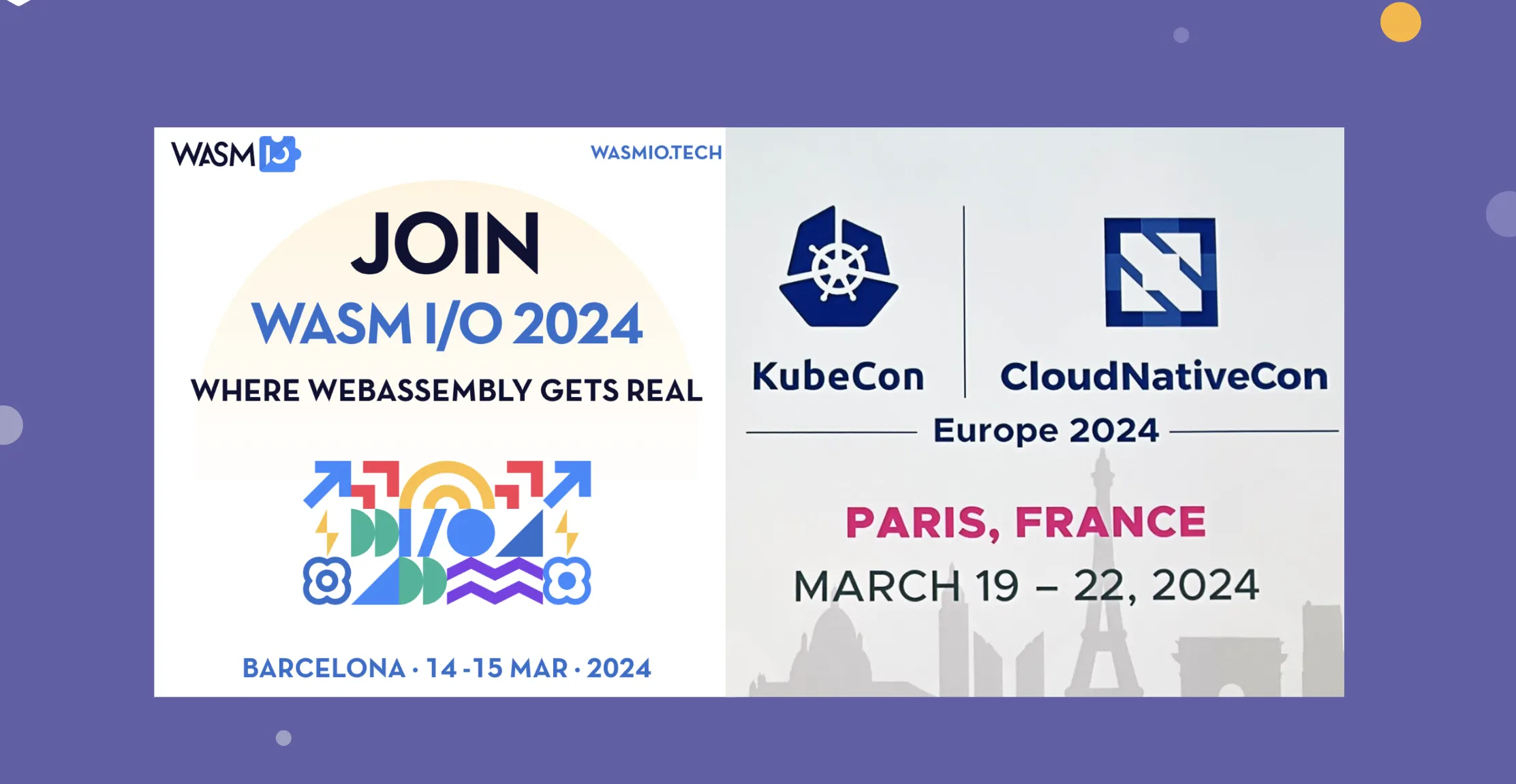
We’re excited to see our friends again as we embark on a whistle-stop tour of two of our favorite European events (and cities) in the 2024 conference calendar: WASM I/O, Barcelona and KubeCon + CloudNativeCon Europe 2024, Paris. With the release of WASI 0.2 and the WebAssembly component model, we’re taking wasmCloud 1.0 on tour—introducing it to cloud native developers, and platform engineers, as the best place to bring components to life in production environments.

Wasm I/O & KubeCon EU 2024 Preview
||8 min read

WASI Preview 2 officially launched! After a vote in the WASI Subgroup of the W3C WebAssembly Community Group, the standard set of interfaces included in the launch of Preview 2, aka WASI 0.2.0, is ready for use by library implementers. We've been closely tracking the different release candidates of WASI 0.2.0 over the last 6 months, and wasmCloud will update its runtime WIT definitions to the pinned versions in just a few days.

WASI 0.2.0 and Why It Matters
b]:tw-hidden>

Keep up to date

Subscribe to Cosmonic for occasional communication straight to your inbox.